
Rick Brewer
February 16, 1945 - January 27, 2026

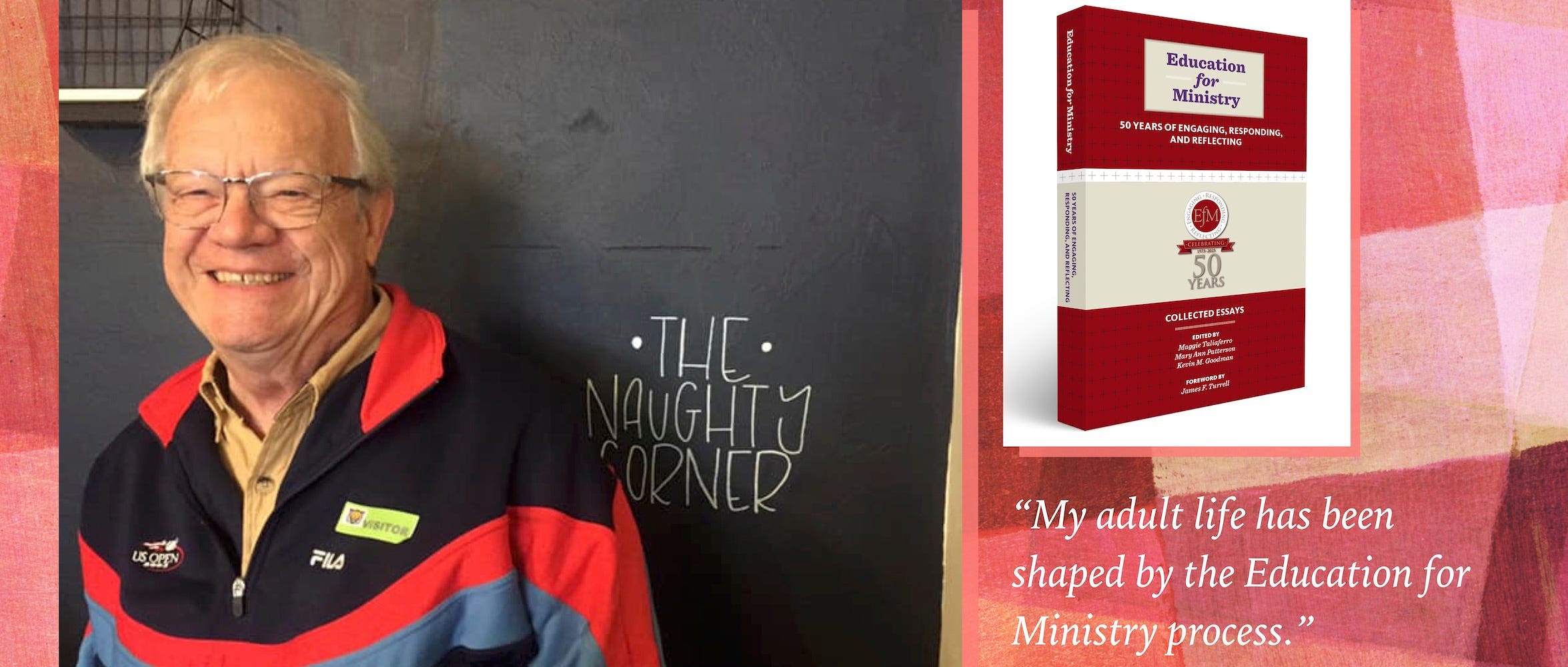
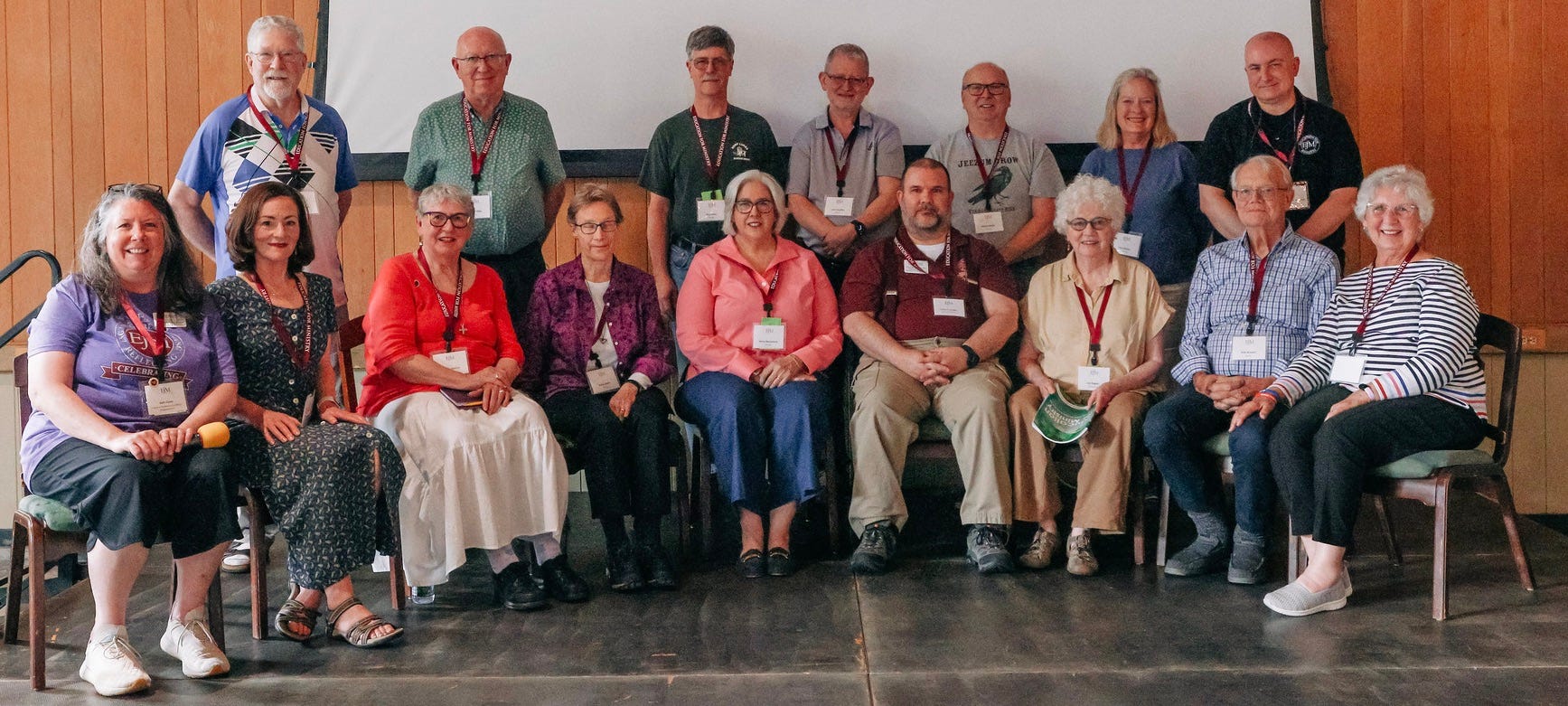
Education for Ministry and the wider church give thanks for the life and ministry of the Rev. Rick Brewer, one of EfM’s earliest visionaries and a guiding presence in the program’s evolution and growth.
Beginning with a formative meeting with Charlie Winters in 1974, Rick became a creative and theological force in shaping Education for Ministry into a program that has accompanied countless persons in deepening their faith in order to live into their ministry in daily life. Over the decades, he served as mentor, trainer, teacher, colleague, and friend to generations of EfM’s constituents across the community.
Rick started in EfM as a mentor with the original texts, the “yellow books,” in 1976 and became a trainer in 1978. Since then, Rick has played a major role in each revision of the EfM curriculum. In the first revision, he developed the Parallel Guides and Common Lessons. Brewer, along with Angela Hock and Karen Meridith, shaped the 2012 revision of the EfM curriculum and wrote the Reading and Reflection Guide (RRG). He continued to contribute his wisdom, creativity, and humor to enhance ministry formation of EfM trainers, mentors, and participants through last year’s 5th curriculum revision.
Known for his thoughtful leadership, generous spirit, and commitment to lifelong theological exploration, Rick helped nurture a vision of ministry grounded in God through faithful engagement with the world. His influence lives on in so many of us whose lives and ministries he helped shape.
We commend Rick to God’s eternal care with gratitude for his life, his ministry, and the enduring legacy he leaves within Education for Ministry and the wider Church.
The celebration of Rick’s life will take place on February 6, 2026, at 2:00 p.m. Central Time at St. Dunstan’s Episcopal Church in Tulsa, Oklahoma. You may join the service via livestream here on YouTube or on St. Dunstan’s Facebook page. Read the full obituary below.
May Rick rest in peace and rise in glory.
From “Becoming an Adult with Education for Ministry” by Rick Brewer
found in the collection of essays
featured in Education for Ministry: 50 Years of Engaging, Responding, and Reflecting
“I first learned of a project called Theological Education by Extension (TEE) in 1974 when the associate rector, under whom I was serving in Stillwater, Oklahoma, came into my office and handed me a sheet of legal-sized paper. It contained a description of TEE. It was of interest to me because the commission on ministry in the Diocese of Oklahoma planned to establish a deacon formation program. Having a core curriculum of the Christian tradition available to people was attractive. Based on the strength of this handout and the interest in deacon formation, the commission on ministry sent me to the Diocese of the Rio Grande to meet with Charlie Winters. During his sabbatical in 1974, Charlie met with Church leaders around the country, presenting the vision of the program. He had a meeting scheduled in Albuquerque, where we were to meet. I got a look at the text material, which was only the first third of Year One, as the rest had not yet been produced produced. I returned home sensing that in some way or another, TEE would be a part of the deacon formation program.
“My next involvement with TEE came in May of 1975. I took a prospective seminarian to the School of Theology in Sewanee, Tennessee, to meet with the dean of the seminary, the Very Rev. Urban T. Holmes III. While he was meeting with the dean, I scheduled a meeting with Charlie to talk more about the project. I remember sitting in a classroom as he spoke of his vision. He sketched a few things on the blackboard and then took me to lunch. We returned to the classroom and after about an hour he asked, “Are you interested in being a mentor?” I was indeed. I returned to Stillwater intending to establish a group; however, I decided to wait a year so that there would be a year’s worth of material available. In the fall of 1976 I started my first group with nine students. We met weekly until December, breaking for Christmas. When we resumed in January, I had only one student. That experience told me that there needed to be a fuller training for mentors—at least for this mentor.
“In January of 1977, I became the vicar of Saint Aidan’s Mission in Tulsa, and that fall I started another group with parishioners from three different parishes in Tulsa. I began to increase my involvement with TEE by becoming the Diocese of Oklahoma’s coordinator. We organized a mentor training event in the fall of 1977 where I met John de Beer, who recommended me as a trainer. In March 1978, I attended my first training of trainers event led by Flower Ross with a group of nine from across the country. We met together in March for three years in succession, working specifically to hone the intricacies of theological reflection—a profound experience of the power of theological reflection. While in Sewanee during those March events, I had frequent opportunities for short conversations with Charlie Winters. One in particular involved my concern about students understanding the material. I remember asking Charlie, “How do you know that they get it right?” Much to my surprise, and even a little shock, he said, “I am not concerned with that. I don’t care if someone is a Manichaean. I want them to know when their position is Manichaean.” I have reflected often over the years on that conversation. Contained in that short exchange is a profound understanding of adult learning. The task of the teacher with adult learners is to provide material that is engaging, interesting, and relevant, and the learner’s responsibility is to keep engaged in the learning process so that they can make a judgment as to when ‘they got it right.’1
“Another evening, Charlie said, “We don’t learn from experience, but only when we reflect on the experience.” In an instant, I realized the centrality of reflection for learning. No reflection, no learning. That is true also for the experience of reading. I can read, but until I reflect on what I have read, I am not learning.2
“EfM started nearly two years ahead of the original plan, crafted to begin in 1977. The Episcopal Church Foundation published an announcement in their newsletter saying that two $20,000 grants had been awarded to the Saint Luke’s Seminary (the previous name of the School of Theology) for the development of the core curriculum for laity. The response was immediate and overwhelming, so much so that Charlie decided to start the program immediately. When I asked him why he decided to do that, he said, “I felt I needed to start while the iron was hot.”3
“The EfM curriculum has about a ten-year currency, meaning that once a decade the content of the material should be revised. The original texts began to be revised in the early 1980s. David Killen, the executive director of EfM, asked me to work within the revision process designing the “learning apparatus.” The Common Lessons and Parallel Guides carried the learning processes. The original Common Lessons consisted of presentations of spiritual autobiography, theological reflection, and vocational discernment. Two optional essays were added to the first edition of the Common Lessons: “Life in Christ” and “Mapping Your Theology.” The Common Lessons were a precursor to the unit essays in the Reading and Reflection Guide.”4
“Over the decades, I have watched centers of creativity move through the EfM network, first centering on Charlie and Flower. After a few years it seemed to center on trainers. Unquestionably, the centers of creativity are now dispersed throughout the mentors and others in the program. Some mentors who have been involved with EfM for more than 30 years, along with others, have been responsive to the guidance of the Holy Spirit.”5
“Many years ago I watched a film called The Invention of the Adolescent. The thesis of the film was that adolescence began with puberty and continued until approximately age 30. Since I became involved with EfM when I was 30, that would mean that my adult life has been shaped by the Education for Ministry process. Who I have become as an adult Christian is profoundly formed within the totality of the experiences manifested in EfM. As I enter my eighth decade, I encounter many challenges—physical, psychological, social, and certainly spiritual. I cannot imagine facing these challenges without the resources, community, and wisdom that EfM has brought into my life. It is with profound gratitude that I thank God for the opportunity to be involved with the Education for Ministry program.”6
Obituary for Richard Elliott Brewer
Richard E. Brewer, 80, of Tulsa, Oklahoma, passed away peacefully at his home on January 27, 2026, at 11:05 a.m.
A memorial service will be held at 2:00 p.m., Friday, February 6, 2026, at St. Dunstan’s Episcopal Church in Tulsa.
Richard was born on February 16, 1945, in Raton, New Mexico. He spent his early years in Raton and Red River, New Mexico, before his family moved to Chandler, Oklahoma, in 1955. He graduated from Chandler High School in 1963 and went on to earn his bachelor’s degree from the University of the South in Sewanee, Tennessee. He later received his Master of Divinity from General Theological Seminary in New York City in 1970.
Ordained as a priest at St. Dunstan’s Episcopal Church in Tulsa in December 1970, he served for fifty years in the priesthood. His ministry included two years as a curate at St. Dunstan’s, forty-eight years serving small congregations, thirty years of which he was also Director of the diocesan Deacon Formation Program. Among his many contributions, he devoted fifty years to the Episcopal Church’s Education for Ministry program, authoring essays and developing resources in collaboration with colleagues.
Richard cherished time with his wife, Angela, enjoying meals at locally owned restaurants and cheering on the OKC Thunder.
He was preceded in death by his parents, Helen Hoyt Brewer and Paul Eli Brewer, and his half-brother, Hoyt Baucom.
He is survived by his loving family: siblings Fletcher Brewer, Paula Brewer Anthony (Bob), and Deanna Basarab Brewer, his wife of forty-one years; later, Angela Hock, his wife of twelve years; children Anne Marie Brewer, Brian Michael Brewer (Melissa), Casey Michelle Brewer Hoffman (Matt), Sherilyn Hock Herndon (Corey), and Elizabeth Hock Haralson (Andrew); grandchildren Aubrey Ione Hoffman, Andrew Herndon (Nina), Nathan Herndon (Taylor), Carly Herndon, Emily Haralson, Lily Haralson; and great-granddaughter Jane Louise Herndon.
Memorial contributions may be made, in lieu of flowers, to St. Aidan’s Episcopal Church, 4045 MLK Jr Blvd, Tulsa, OK 74106, and/or St. Dunstan’s Episcopal Church Memorial Garden Fund, 5635 E. 71st St., Tulsa, OK 74136.
LINK HERE to leave a message for Angela and for their family.
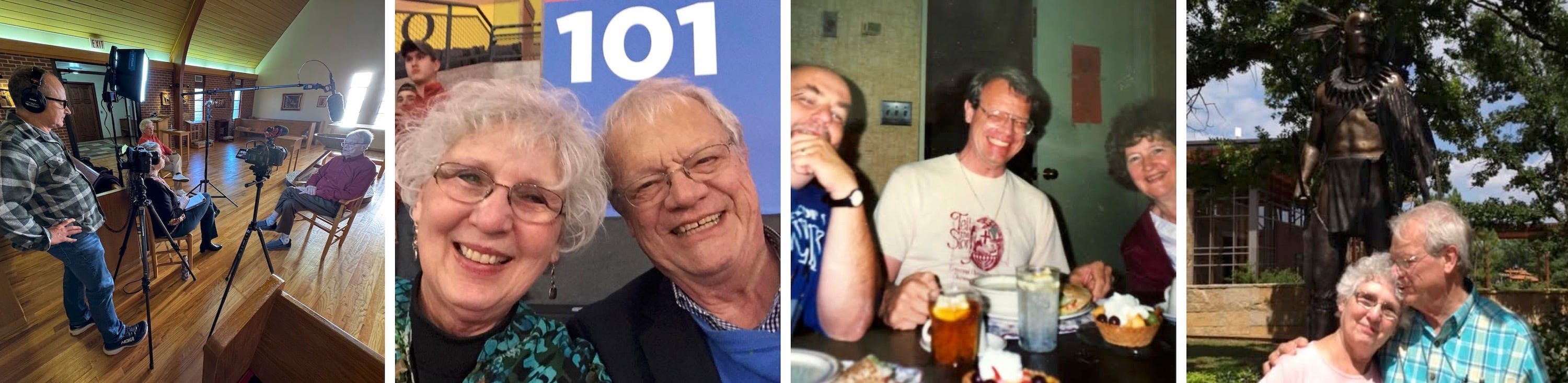
Taliaferro, Maggie; Patterson, Mary Ann; Goodman, Kevin M; Turrell, James F.. Education for Ministry 50 Years of Engaging, Responding, and Reflecting: Collected Essays (pp. 9-11). (Function). Kindle Edition.
Taliaferro et al., Education for Ministry, 12.
Taliaferro et al., Education for Ministry, 12.
Taliaferro et al., Education for Ministry, 12.
Taliaferro et al., Education for Ministry, 13.
Taliaferro et al., Education for Ministry, 14.